
Heat Exchanger for Wood Drying
Kiln heating coils built for acidic, humid air

Elevating global standards with exceptional, unmatched Dutch craftsmanship in advanced industrial heat exchange.

What is a Heat Exchanger for Wood Drying?
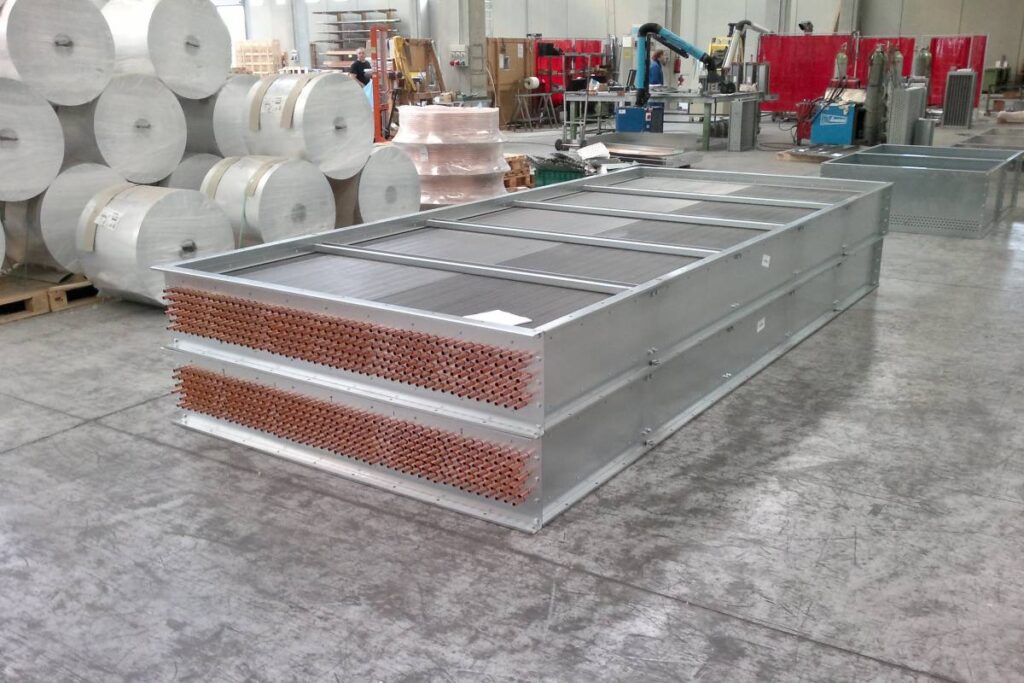
A heat exchanger for wood drying heats the air that circulates through a lumber dry kiln. Banks of finned tube coils sit in the air path above or beside the lumber stacks, and fans blow air across them and through the stacks. Steam, hot water or thermal oil flows through the tubes and provides the heat that evaporates the water from the wood. Together with venting and humidity control, the coils set the kiln schedule that decides how fast and how well the lumber dries.
Kiln coils work in one of the harshest environments in any industrial plant. Wood releases acetic acid and other organic acids during drying, and the condensate in a kiln is often strongly acidic. Coils in the wrong materials corrode, leak and lose fins within a few seasons. ICARUS designs and builds kiln heating coils that are made for this environment, as part of our wider range of heat exchangers for drying processes.
Dutch excellence in heat exchange
At ICARUS Industrial, we blend Dutch craftsmanship with innovative technology, redefining the gold standard for industrial heat exchangers. Dive into the future of sustainable manufacturing, where our Dutch-engineered solutions elevate energy efficiency to unparalleled heights.
Lower total cost of ownership (TCO)
We go beyond performance with our heat exchangers, sculpting an unbeatable blend of.
Direct manufacturer benefits
Your unique needs are our command. We offer tailored heat exchanger solutions.
Customized solutions
With ICARUS Industrial, you're not just buying a product, you're engaging a partnership. Our direct sales model
Superior durability
Built from robust materials, our heat exchangers are a testament to resilience. They reduce maintenance
Heating Coils for Every Type of Dry Kiln
Sawmills in the United States are adding and upgrading kiln capacity, especially in the South, where new southern yellow pine mills and continuous dry kilns keep coming online. At the same time, many existing kilns run on coils that are decades old. ICARUS supplies coils for both: new kiln projects with kiln builders and EPC contractors, and replacement coils for mills that want to restore capacity.
Steam Coils for Batch and Continuous Kilns
Steam is still the most common heat source for industrial lumber kilns, especially where a biomass boiler burns bark and sawdust from the mill. ICARUS builds steam heating coils with headers and tube slopes designed for full condensate drainage, so the coils do not suffer from water hammer or freeze damage when the kiln stands still in winter. For high temperature kilns drying southern yellow pine at temperatures above 212 °F (100 °C), we size tubes and headers for the higher steam pressures these schedules need.
Hot Water and Thermal Oil Coils
Many kilns run on hot water from a biomass or gas boiler, or on thermal oil when higher temperatures are needed without high pressure. ICARUS builds hot water coils and thermal oil heaters with circuiting that gives an even air temperature along the full length of the kiln. Even heat across the charge means more uniform final moisture and fewer boards that need to be redried or downgraded.
Materials That Resist Kiln Acids
Kiln condensate can reach a pH of around 3.5, especially when drying oak and other hardwoods. That attacks carbon steel, galvanized steel and unprotected aluminum fins. ICARUS selects materials per kiln and species: stainless steel tubes and headers, aluminum fins with a protective coating, or fully stainless steel coils for the most aggressive conditions. The approach follows our experience with stainless steel heat exchangers for aggressive environments.
Coils for Dehumidification and Heat Recovery
Dehumidification kilns remove moisture by cooling the kiln air on a cold coil, then reheating it. Those cooling coils see acidic condensate all day long and need protective coatings or stainless steel to last. ICARUS builds both the cold coils, similar to our dehumidification coolers, and the hot coils for these systems, as well as heat recovery coils that preheat fresh air with the energy in the kiln exhaust. In a conventional kiln, venting losses are one of the biggest energy costs, so heat recovery pays back quickly.
Replacement Coils for Existing Kilns
When kiln coils start to leak, the mill loses drying capacity and often lumber quality as well. ICARUS builds drop-in replacement coils that match the dimensions, headers and connections of the existing coil banks, from drawings, a sample or measurements on site. We split coil banks into sections that fit through the kiln doors and can be replaced during a short shutdown. Where the old coils failed from corrosion, we upgrade the materials so the new coils last longer.

Download products reference list
Download the comprehensive product reference list for heat exchangers and cooling systems.
Request Heating Coils for Your Dry Kiln
ICARUS works with kiln builders, sawmills, engineering firms and wood product manufacturers. Whether you are building a new continuous kiln or replacing corroded coils in a batch kiln, we design the heat exchanger around your kiln, your heating medium and your species. As a direct manufacturer in the Netherlands, we handle thermal design, production and testing in house, and you can see examples of our work in our project references. Pressure parts can be built according to ASME Section VIII.
To prepare a quotation quickly, send us:
- Kiln type (batch, continuous or dehumidification) and capacity
- Wood species and the maximum dry bulb temperature of the schedule
- Heating medium (steam, hot water or thermal oil) with temperature and pressure
- Air flow per coil bank and the available space
- Dimensions, connections and photos of the existing coils for replacements
- Required quantity and target delivery date
Missing some data? Send what you have and our engineers will help you complete the specification.
Request a quotation
Elevate your efficiency with Dutch-engineered solutions tailored for your needs. Fill out the details below, and our team will provide a personalized quote to help you harness the power of optimized energy in manufacturing. Step into the future, one quote at a time.
ICARUS Heat Exchangers
Quotation Form
Facts about ICARUS
> 27
With over 27 years in business, we’ve carved out a reputation for excellence and innovation.
> 120+
Our global presence is marked by a diverse clientele of over 120 customers worldwide.
> 850+
Moreover, our portfolio boasts more than 850 completed projects.
FAQs about Heat Exchanger for Wood Drying
What heats the air in a lumber dry kiln?
Most industrial kilns heat the air with banks of finned tube coils supplied with steam, hot water or thermal oil from a boiler. Fans circulate the air across the coils and through the lumber stacks. Some kilns use direct-fired burners instead, and dehumidification kilns use a heat pump with a cold and a hot coil.
Why do dry kiln coils corrode?
Wood releases acetic acid and other organic acids during drying. These acids end up in the condensate inside the kiln, which can reach a pH of around 3.5. Carbon steel, galvanized steel and unprotected aluminum corrode quickly in these conditions. Stainless steel tubes and headers and coated or stainless fins last much longer.
Can ICARUS replace the coils in an existing kiln?
Yes. We build replacement coils that match the dimensions, headers and connections of the existing coil banks. We can work from drawings, a sample coil or measurements on site, and we split coil banks into sections that are easy to install during a short shutdown.
Which is better for a kiln: steam, hot water or thermal oil?
Steam gives high heat transfer and suits high temperature schedules, but needs a steam boiler and good condensate handling. Hot water is simple and safe for conventional schedules up to around 180 °F (82 °C) air temperature. Thermal oil reaches high temperatures at low pressure. ICARUS designs coils for all three, matched to your boiler and schedule.
What information do you need to quote kiln heating coils?
We need the kiln type and capacity, the species and maximum dry bulb temperature, the heating medium with its temperature and pressure, the air flow and available space, and for replacements the dimensions and photos of the existing coils. If some data is missing, our engineers will help you complete it.


