
High corrosion environment finned tube heat exchanger
Improve processing with heat exchangers

Elevating global standards with exceptional, unmatched Dutch craftsmanship in advanced industrial heat exchange.

What is a High Corrosion Environment Finned Tube Heat Exchanger?
A high corrosion environment finned tube heat exchanger is a specialized type of heat transfer equipment designed to operate reliably in aggressive and corrosive conditions such as chemical processing plants, offshore installations, and marine environments. These exchangers use finned tubes to increase the available heat transfer surface, improving heat transfer efficiency while maintaining strong corrosion resistance. Materials such as stainless steel, titanium, aluminum, carbon steel, or copper alloys are often combined with protective coatings to protect the metal surfaces from chemical exposure, salt air, and moisture. This design ensures durable thermal performance, high reliability, and long service life in demanding industrial environments.
Dutch excellence in heat exchange
At ICARUS Industrial, we blend Dutch craftsmanship with innovative technology, redefining the gold standard for industrial heat exchangers. Dive into the future of sustainable manufacturing, where our Dutch-engineered solutions elevate energy efficiency to unparalleled heights.
Lower total cost of ownership (TCO)
We go beyond performance with our heat exchangers, sculpting an unbeatable blend of.
Direct manufacturer benefits
Your unique needs are our command. We offer tailored heat exchanger solutions.
Customized solutions
With ICARUS Industrial, you're not just buying a product, you're engaging a partnership. Our direct sales model
Superior durability
Built from robust materials, our heat exchangers are a testament to resilience. They reduce maintenance
Built to Withstand Aggressive Industrial Environments
Materials That Resist Chemical and Marine Corrosion
In corrosive environments, the material selection of a finned tube heat exchanger is critical. Industries such as chemical processing, offshore rigs, and marine environments expose heat transfer equipment to salt air, chemicals, and moisture that can rapidly degrade conventional metals. To ensure long-term durability, engineers often select materials such as stainless steel, titanium, carbon steel, aluminum, or copper alloys with strong chemical resistance. In more extreme environments, nickel-based alloys such as Inconel or Monel may also be used to withstand highly corrosive conditions. These materials provide the required corrosion protection while maintaining excellent thermal conductivity for efficient heat transfer across the finned tube bundles.
Protective Coatings for Enhanced Corrosion Protection
Even with corrosion-resistant materials, additional protection is often required to ensure long service life. Advanced coatings are commonly applied to finned tubes and external metal surfaces to protect against salt spray, chemical exposure, and atmospheric corrosion. Specialized coatings such as polyurethane coatings or corrosion-resistant surface treatments create a protective barrier that prevents degradation while maintaining strong heat transfer efficiency. These coatings are widely used in HVAC systems, air-cooled heat exchangers, condensers, and radiators operating in marine and coastal environments or aggressive chemical plants. Properly applied coatings also help protect against formicary corrosion, fouling, and environmental wear.
Applications in Demanding Industrial Processes
A high corrosion environment finned tube heat exchanger is used across industries where heat exchange must occur in harsh operating conditions. Common applications include petrochemical processing, offshore platforms, marine HVAC systems, power plants, and industrial process cooling systems. These exchangers can function as oil coolers, pre-heaters, condensers, intercoolers, and air-cooled heat exchangers where reliable thermal performance is required. The extended heat transfer surfaces created by the fins improve the overall heat transfer efficiency, allowing these systems to maintain high performance even in fouling environments and high-temperature conditions. Through careful engineering and durable materials, these exchangers ensure stable operation in some of the most demanding industrial environments.

Download products reference list
Download the comprehensive product reference list for heat exchangers and cooling systems.
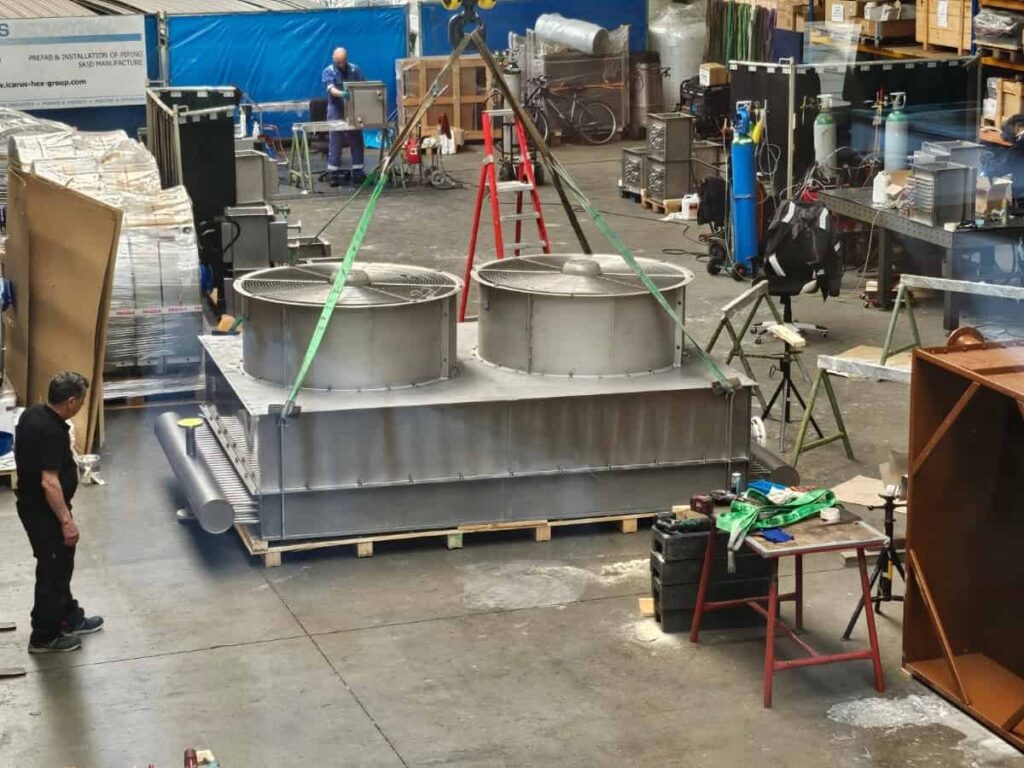
Durable Heat Transfer Solutions from ICARUS
Operating in corrosive environments demands heat exchange equipment that combines strength, reliability, and high heat transfer efficiency. A high corrosion environment finned tube heat exchanger must withstand chemical exposure, salt air, and thermal cycling while maintaining consistent thermal performance. At ICARUS Heat Exchange Group, our engineers design robust finned tube heat exchangers using carefully selected materials such as stainless steel, aluminum, titanium, and specialized alloys to ensure excellent corrosion resistance and long-term durability. With optimized fin density, advanced coatings, and precision manufacturing, our systems deliver reliable performance in marine, petrochemical, and industrial HVAC applications. Contact ICARUS to enquire about high-quality heat exchangers engineered for demanding environments.
Request a quotation
Elevate your efficiency with Dutch-engineered solutions tailored for your needs. Fill out the details below, and our team will provide a personalized quote to help you harness the power of optimized energy in manufacturing. Step into the future, one quote at a time.
ICARUS Heat Exchangers
Quotation Form
Facts about ICARUS
> 27
With over 27 years in business, we’ve carved out a reputation for excellence and innovation.
> 120+
Our global presence is marked by a diverse clientele of over 120 customers worldwide.
> 850+
Moreover, our portfolio boasts more than 850 completed projects.
FAQs about High corrosion environment finned tube heat exchanger
What is a high corrosion environment finned tube heat exchanger used for?
A high corrosion environment finned tube heat exchanger is designed for heat transfer applications where equipment is exposed to aggressive conditions such as chemicals, salt air, or moisture. These exchangers are commonly used in chemical processing plants, offshore rigs, marine HVAC systems, and power plants where corrosion resistance is essential for reliable operation.
Which materials are used in corrosion-resistant finned tube heat exchangers?
These heat exchangers are typically manufactured using stainless steel, titanium, aluminum, carbon steel, or copper alloys. In highly corrosive conditions, nickel-based alloys such as Inconel or Monel may be used. These materials provide strong corrosion resistance while maintaining good thermal conductivity for efficient heat transfer.
How do coatings improve corrosion protection?
Protective coatings create a barrier on metal surfaces that shields the exchanger from chemical exposure, salt spray, and moisture. These coatings help prevent corrosion, reduce fouling, and extend the lifespan of finned tubes while maintaining strong heat transfer efficiency.
In which industries are corrosion-resistant finned tube heat exchangers commonly used?
They are widely used in petrochemical processing, offshore and marine applications, industrial HVAC systems, chemical plants, and power generation facilities where heat exchangers must operate reliably in corrosive environments.
Why are finned tubes beneficial in corrosive environments?
Finned tubes increase the available heat transfer surface, improving overall heat transfer efficiency. This allows heat exchangers to maintain strong thermal performance even in harsh operating conditions where corrosion protection and durability are critical.


