
Improve processing with heat exchangers
Exhaust gas finned tube heat exchanger

Elevating global standards with exceptional, unmatched Dutch craftsmanship in advanced industrial heat exchange.
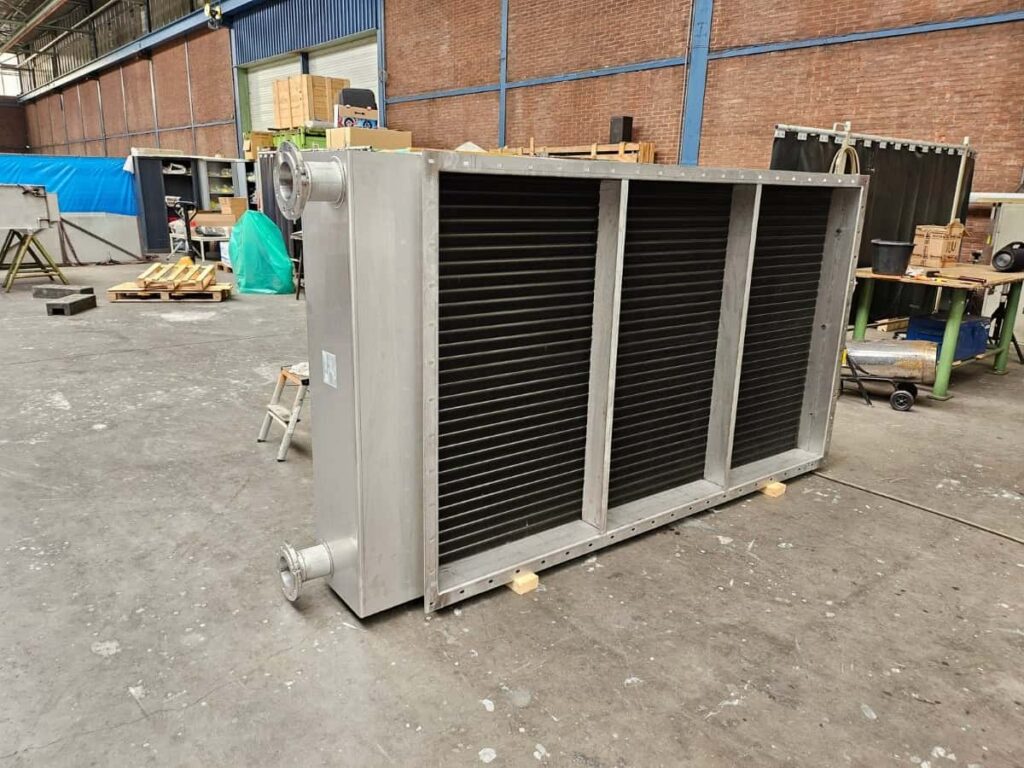
What is an Exhaust Gas Finned Tube Heat Exchanger?
An exhaust gas finned tube heat exchanger is a thermal system designed to recover heat from hot exhaust gases produced by industrial processes, engines, or turbines. Using finned tubes made from materials such as steel, stainless steel, copper, or aluminum, the exchanger increases the available heat transfer surface to capture otherwise lost waste heat. As exhaust gases flow across the finned tube bank, thermal energy is transferred to another medium such as water, air, steam, or thermal oil. This process improves heat transfer efficiency, supports waste heat recovery systems, and reduces overall energy consumption in applications such as industrial processes, HVAC systems, and power generation equipment.
Dutch excellence in heat exchange
At ICARUS Industrial, we blend Dutch craftsmanship with innovative technology, redefining the gold standard for industrial heat exchangers. Dive into the future of sustainable manufacturing, where our Dutch-engineered solutions elevate energy efficiency to unparalleled heights.
Lower total cost of ownership (TCO)
We go beyond performance with our heat exchangers, sculpting an unbeatable blend of.
Direct manufacturer benefits
Your unique needs are our command. We offer tailored heat exchanger solutions.
Customized solutions
With ICARUS Industrial, you're not just buying a product, you're engaging a partnership. Our direct sales model
Superior durability
Built from robust materials, our heat exchangers are a testament to resilience. They reduce maintenance
Turning Exhaust Heat into Valuable Energy
Capturing Waste Heat from Industrial Exhaust Streams
Industrial processes often release large amounts of unused thermal energy through exhaust gases. An exhaust gas finned tube heat exchanger is designed to capture this lost energy and convert it into usable heat for other processes. As flue gas from sources such as gas turbines, internal combustion engines, diesel engines, or fired heaters flows through a vertical duct or exhaust stack, it passes across a finned tube bank. The extended surfaces created by the fins significantly increase the available heat transfer surface, enabling efficient waste heat recovery. The recovered heat can then be transferred to air, water, steam, or thermal oil, improving overall energy recovery systems and reducing energy losses in industrial facilities.
Engineering Finned Tubes for High Thermal Efficiency
The effectiveness of an exhaust gas heat exchanger depends heavily on the design of the fins and tubes heat exchanger. Engineers optimize parameters such as fin pitch, tube material, airflow resistance, and pressure drop to achieve the highest possible heat transfer coefficient. Materials like steel pipes, stainless steel, aluminum, or copper are selected for their strength and thermal conductivity. Designs may incorporate longitudinal finned tubes, helical fins, or elliptical tubes to improve forced convection and enhance the transfer of heat from hot gases to the internal fluid. These optimized tube configurations increase thermal transfer efficiency while maintaining manageable airflow resistance across the exchanger.
Applications in Power Generation and Industrial Energy Recovery
Exhaust gas finned tube heat exchangers are widely used in power plants, industrial cooling systems, and waste heat recovery units. They are commonly integrated into economizers, gas turbine exhaust recovery systems, and diesel engine exhaust installations, where high-temperature gases contain valuable recoverable energy. In these applications, the exchanger converts waste heat into useful thermal energy that can support industrial HVAC systems, process heating, or energy storage systems. By capturing heat that would otherwise be lost through exhaust stacks, these systems significantly improve energy savings, reduce fuel consumption, and support more sustainable industrial operations.

Download products reference list
Download the comprehensive product reference list for heat exchangers and cooling systems.
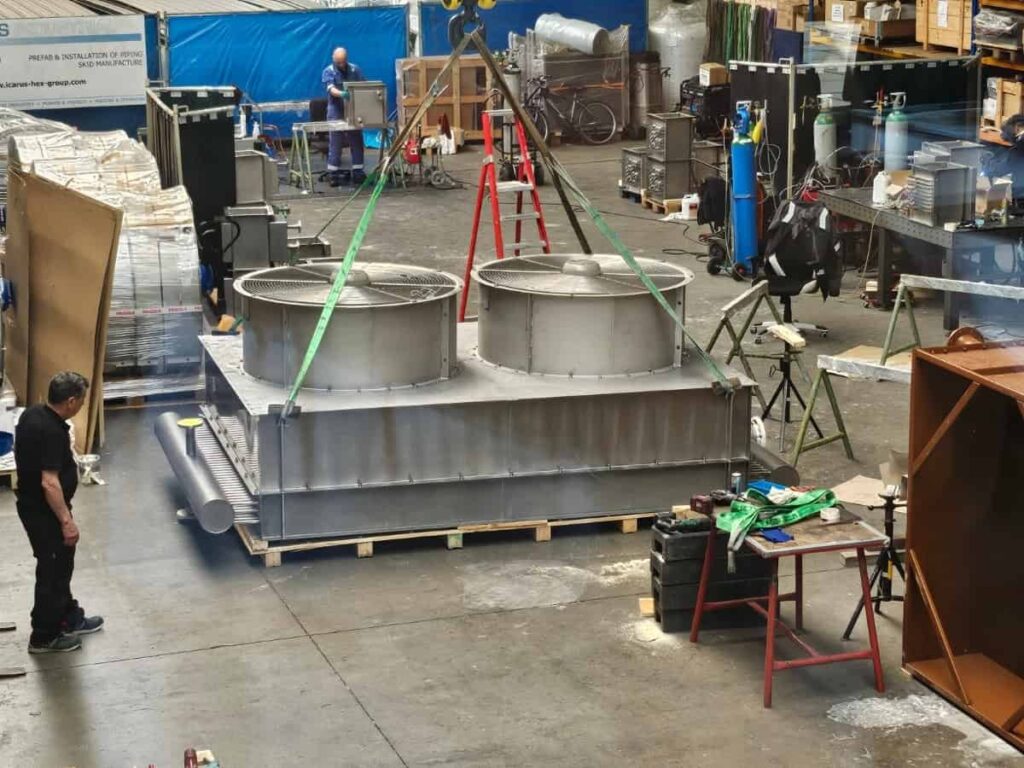
Advanced Waste Heat Recovery with ICARUS
Recovering valuable thermal energy from exhaust streams is a powerful way to improve industrial efficiency. A well-engineered exhaust gas finned tube heat exchanger captures waste heat from flue gas streams and converts it into useful energy for heating air, water, steam, or thermal oil systems. At ICARUS Heat Exchange Group, we design robust finned tube heat exchangers with optimized heat transfer surfaces, durable stainless steel, copper, or aluminum materials, and carefully engineered tube banks to maximize heat transfer efficiency while minimizing pressure drop. Our solutions support waste heat recovery systems, industrial HVAC installations, and energy recovery processes worldwide. Contact ICARUS to explore reliable heat exchanger solutions that transform exhaust heat into energy savings.
Request a quotation
Elevate your efficiency with Dutch-engineered solutions tailored for your needs. Fill out the details below, and our team will provide a personalized quote to help you harness the power of optimized energy in manufacturing. Step into the future, one quote at a time.
ICARUS Heat Exchangers
Quotation Form
Facts about ICARUS
> 27
With over 27 years in business, we’ve carved out a reputation for excellence and innovation.
> 120+
Our global presence is marked by a diverse clientele of over 120 customers worldwide.
> 850+
Moreover, our portfolio boasts more than 850 completed projects.
FAQs about Exhaust gas finned tube heat exchanger
What is an exhaust gas finned tube heat exchanger used for?
An exhaust gas finned tube heat exchanger is used to recover waste heat from hot exhaust gases produced by engines, turbines, or industrial processes. The recovered heat can then be transferred to air, water, steam, or thermal oil for reuse in heating systems, improving overall energy efficiency.
How does an exhaust gas finned tube heat exchanger work?
Hot flue gas flows across a finned tube bank, where the extended surfaces increase the heat transfer surface. Thermal energy is transferred through the tube walls to a secondary fluid flowing inside the tubes, allowing efficient heat transfer and recovery of energy that would otherwise be lost through exhaust stacks.
Which materials are commonly used in exhaust gas heat exchangers?
These heat exchangers are typically constructed from durable materials such as steel, stainless steel, copper, or aluminum. The chosen tube material must withstand high temperatures, corrosion risk, and demanding operating conditions while maintaining strong thermal conductivity.
Where are exhaust gas finned tube heat exchangers commonly applied?
They are widely used in power plants, gas turbine exhaust recovery systems, diesel engine exhaust installations, industrial furnaces, and waste heat recovery units. They are also integrated into economizers and industrial HVAC systems to reuse recovered thermal energy.
What are the benefits of exhaust gas waste heat recovery?
Recovering exhaust heat improves energy savings, reduces fuel consumption, and lowers emissions. By using a finned tube heat exchanger, industries can convert lost thermal energy into useful heating for industrial processes, increasing overall thermal transfer efficiency.


