
Heat Exchanger for Refrigeration Systems
Improve processing with heat exchangers

Elevating global standards with exceptional, unmatched Dutch craftsmanship in advanced industrial heat exchange.
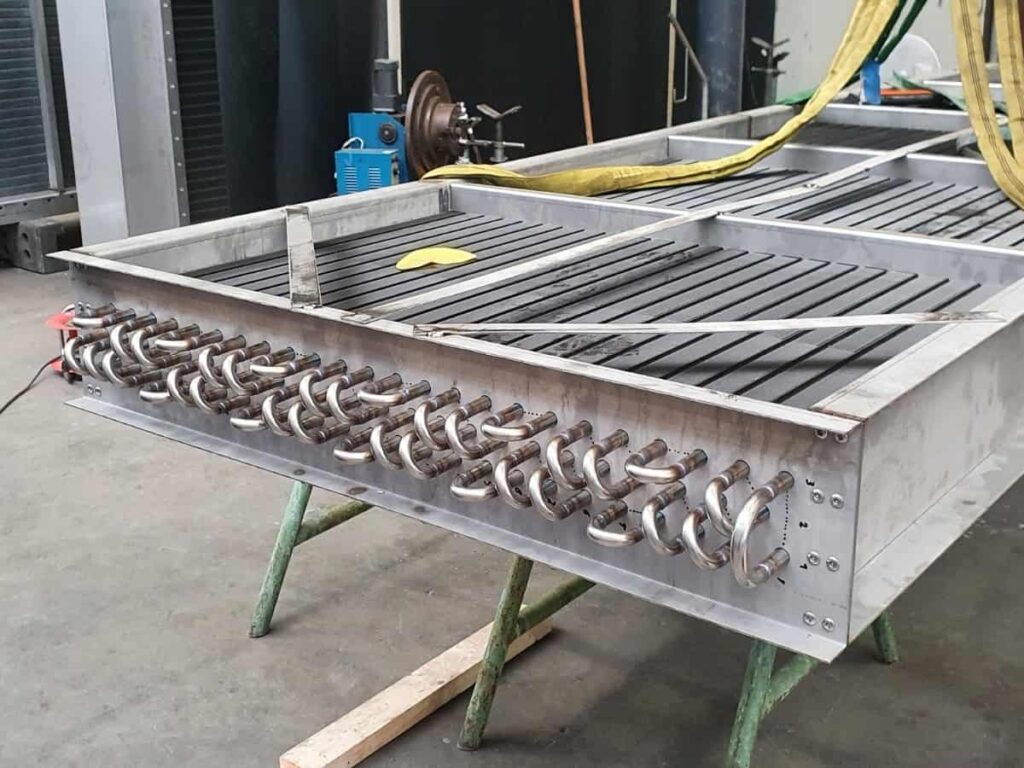
What is a Heat Exchanger for Granules?
A heat exchanger for refrigeration systems is a core component that enables efficient heat transfer within the refrigeration cycle. It facilitates the exchange of thermal energy between refrigerant and surrounding fluids or air during condensing and evaporating processes. In applications such as HVAC, air conditioning, and industrial refrigeration, these heat exchangers support stable cooling performance and energy efficiency. Using corrosion-resistant metals like stainless steel and advanced finned tube designs, they ensure reliable operation under varying temperatures, pressures, and flow conditions across a wide range of refrigeration applications.
Dutch excellence in heat exchange
At ICARUS Industrial, we blend Dutch craftsmanship with innovative technology, redefining the gold standard for industrial heat exchangers. Dive into the future of sustainable manufacturing, where our Dutch-engineered solutions elevate energy efficiency to unparalleled heights.
Lower total cost of ownership (TCO)
We go beyond performance with our heat exchangers, sculpting an unbeatable blend of.
Direct manufacturer benefits
Your unique needs are our command. We offer tailored heat exchanger solutions.
Customized solutions
With ICARUS Industrial, you're not just buying a product, you're engaging a partnership. Our direct sales model
Superior durability
Built from robust materials, our heat exchangers are a testament to resilience. They reduce maintenance
Precision Heat Transfer Within the Refrigeration Cycle
Supporting Condensing and Evaporating Processes
In refrigeration systems, heat exchangers play a critical role in both the condenser and evaporator stages of the thermodynamic cycle. During condensation, heat is released from the refrigerant to air or water, while in the evaporator thermal energy is absorbed to create the desired cooling effect. Finned tube heat exchangers are well suited for these duties as they promote efficient convection and stable heat flows across a wide operating range. Their design supports both single-phase and phase-change processes, ensuring consistent performance in air conditioning, HVAC, and industrial cooling systems.
Finned Tube Technology for Reliable Cooling Performance
The finned tube configuration enhances heat transfer coefficients by increasing surface area and inducing controlled turbulence around the tubes. This makes it highly effective in refrigeration circuits where precise temperature control, subcooling, and superheating are essential. Stainless steel finned coils offer corrosion resistance and mechanical strength, reducing fouling rates and maintaining performance over time. Whether applied in cooling coils, condensers, or evaporator coils, this technology delivers dependable thermal energy exchange even under fluctuating load conditions and defrost cycles.
Designed for Integration and Long-Term Operation
Heat exchangers for refrigeration systems must integrate seamlessly with compressors, expansion valves, and fluid circulation components. ICARUS designs finned tube heat exchangers to match specific flow rates, pressure levels, and refrigerants such as ammonia or water glycol mixtures. Robust construction minimizes flow-induced vibrations and supports long service life in demanding environments. By combining efficient heat transfer with durable materials, these systems contribute to lower energy consumption, improved system stability, and reduced maintenance across diverse refrigeration applications.

Download products reference list
Download the comprehensive product reference list for heat exchangers and cooling systems.
Engineering Efficiency for Modern Refrigeration
Efficient refrigeration depends on precise and reliable heat transfer at every stage of the system. With a heat exchanger for refrigeration systems from ICARUS, performance, durability, and energy efficiency come together in a single solution. Our finned tube heat exchangers are engineered to support condensers and evaporators across HVAC, air conditioning, and industrial refrigeration applications. By combining corrosion-resistant materials with proven thermal design, we help optimize cooling performance and reduce operating costs. Contact ICARUS to enquire about high-quality finned tube heat exchangers tailored to your refrigeration system requirements.
Request a quotation
Elevate your efficiency with Dutch-engineered solutions tailored for your needs. Fill out the details below, and our team will provide a personalized quote to help you harness the power of optimized energy in manufacturing. Step into the future, one quote at a time.
ICARUS Heat Exchangers
Quotation Form
Facts about ICARUS
> 27
With over 27 years in business, we’ve carved out a reputation for excellence and innovation.
> 120+
Our global presence is marked by a diverse clientele of over 120 customers worldwide.
> 850+
Moreover, our portfolio boasts more than 850 completed projects.
FAQs about Heat Exchanger for Refrigeration Systems
What is the role of a heat exchanger in refrigeration systems?
A heat exchanger enables heat transfer between the refrigerant and air or fluids during condensation and evaporation. This process is essential for maintaining the cooling effect within the refrigeration cycle.
Why are finned tube heat exchangers used in refrigeration applications?
Finned tube heat exchangers increase the heat transfer surface area, improving efficiency and supporting stable performance in condensers and evaporators under varying operating conditions.
Which materials are commonly used for refrigeration heat exchangers?
Corrosion-resistant metals such as stainless steel are commonly used, especially in applications exposed to moisture, temperature fluctuations, or aggressive operating environments.
Can these heat exchangers work with different refrigerants?
Yes, heat exchangers for refrigeration systems can be designed to operate with various refrigerants, including ammonia and water glycol mixtures, depending on system requirements.
How does ICARUS ensure long-term reliability in refrigeration systems?
ICARUS applies proven finned tube designs, precise engineering, and durable materials to deliver heat exchangers that maintain performance, reduce maintenance needs, and support long-term system efficiency.


