
Improve processing with heat exchangers
Heat Exchanger for Chemical Processing

Elevating global standards with exceptional, unmatched Dutch craftsmanship in advanced industrial heat exchange.

What is a Heat Exchanger for Chemical Processing?
A heat exchanger for chemical processing is a specialized device designed to efficiently transfer thermal energy between fluid streams in chemical plants and related industries. These systems are crucial for controlling process temperatures, enhancing energy efficiency, and facilitating vital reactions. Typically built with materials resistant to corrosion and fouling—such as stainless steel or alloy—they handle a wide range of temperatures, pressures, and chemical species. From heating volatile feedstocks to condensing vapor streams, these heat exchangers play a central role in optimizing thermal management and ensuring the smooth operation of chemical processing units.
Dutch excellence in heat exchange
At ICARUS Industrial, we blend Dutch craftsmanship with innovative technology, redefining the gold standard for industrial heat exchangers. Dive into the future of sustainable manufacturing, where our Dutch-engineered solutions elevate energy efficiency to unparalleled heights.
Lower total cost of ownership (TCO)
We go beyond performance with our heat exchangers, sculpting an unbeatable blend of.
Direct manufacturer benefits
Your unique needs are our command. We offer tailored heat exchanger solutions.
Customized solutions
With ICARUS Industrial, you're not just buying a product, you're engaging a partnership. Our direct sales model
Superior durability
Built from robust materials, our heat exchangers are a testament to resilience. They reduce maintenance
Precision Under Pressure: The Role of Heat Exchangers in Chemical Processing
In the demanding world of chemical processing, heat exchangers are more than just mechanical components — they are silent enablers of efficiency, safety, and productivity. At ICARUS, we understand the rigorous requirements and intricate balance of temperature, pressure, flow, and material compatibility that govern every unit in a chemical plant. Here’s how high-performance heat exchangers meet those needs across the board.
Managing Thermal Loads in Dynamic Environments
In chemical processing plants, temperature control isn’t a luxury—it’s a necessity. Whether you’re dealing with hot fluid reactions, condensation of vapor, or thermal energy recovery, the ability to precisely manage thermal gradients is critical. Counter-current flow designs, like in plate-type or shell-and-tube heat exchangers, offer excellent temperature differences and thermal efficiency. By selecting the right heat transfer surface area and materials, engineers can reduce energy consumption and improve operational stability under varying ambient temperatures.
Handling Complex Fluids and Fouling
Chemical processes often involve corrosive or fouling fluids—such as those carrying chlorinated hydrocarbons or volatile components. This calls for heat exchangers designed with resistance to fouling, using advanced materials like alloy grades or stainless steel. Specialized units such as gasketed plate heat exchangers and coiled tube exchangers help minimize the buildup of residues, preserving heat transfer rates and prolonging operational uptime in chemical reaction environments.
Versatility Across Processes and Products
From chemical plants to food and pharmaceutical industries, heat exchangers for chemical processing are tailored to handle everything from volatile gas products to dense process fluids. The modular design of units such as plate-and-frame or counterflow exchangers allows for scalability and adaptation across diverse processing conditions. These exchangers can be customized to accommodate mass flow rate variations, thermal expansion, and chemical compatibility, making them a critical component in energy recovery and thermal optimization.

Download products reference list
Download the comprehensive product reference list for heat exchangers and cooling systems.
Partner with ICARUS for cutting-edge heat exchanger solutions
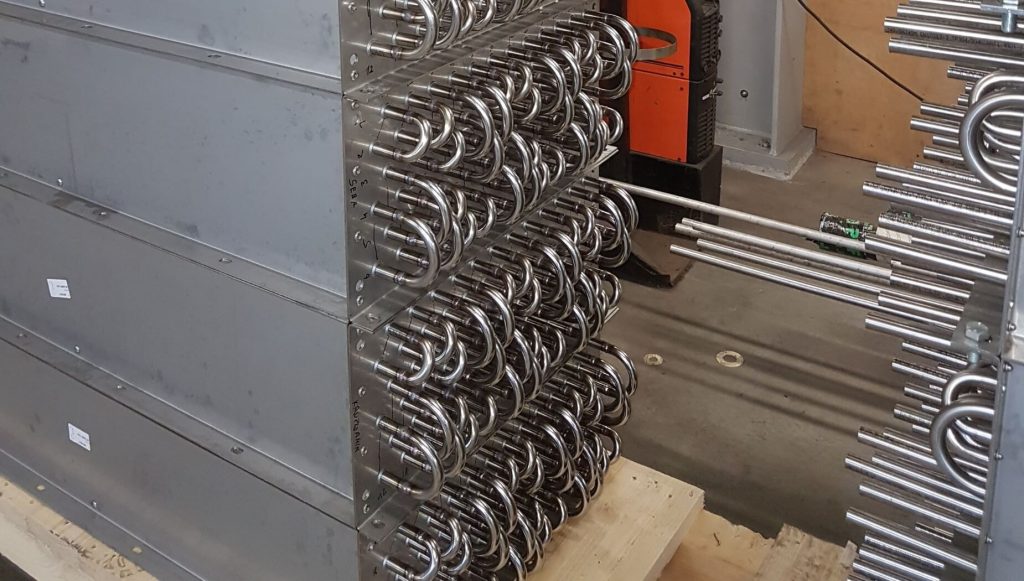
At ICARUS, we understand that the heart of efficient food processing lies in the effectiveness of heat transfer technologies. With our extensive range of finned tube heat exchangers, tailored specifically for the food industry, we are equipped to handle even the most challenging heat transfer applications. Our solutions are designed to ensure maximum thermal efficiency, impeccable food safety, and optimal energy usage, aligning with the stringent standards required in food and beverage production.
Enhance your food processing operations
Whether you are involved in the delicate processing of dairy products, the rapid pasteurization of beverages, or the careful heating of high-viscosity foods like peanut butter and pizza sauce, ICARUS has the expertise and technology to elevate your operations. Our heat exchangers are crafted from high-quality stainless steel, ensuring durability, ease of maintenance, and compliance with food hygiene regulations.
We invite you to explore how ICARUS can enhance your production capabilities and product quality. Connect with our dedicated sales and service teams to discuss your specific needs and discover the ideal heat exchanger solutions that can transform your food processing operations. Trust ICARUS to be your partner in achieving operational excellence and innovation in food safety and processing efficiency.
Request a quotation
Elevate your efficiency with Dutch-engineered solutions tailored for your needs. Fill out the details below, and our team will provide a personalized quote to help you harness the power of optimized energy in manufacturing. Step into the future, one quote at a time.
ICARUS Heat Exchangers
Quotation Form
Facts about ICARUS
> 27
With over 27 years in business, we’ve carved out a reputation for excellence and innovation.
> 120+
Our global presence is marked by a diverse clientele of over 120 customers worldwide.
> 850+
Moreover, our portfolio boasts more than 850 completed projects.
FAQs about Heat Exchanger for Chemical Processing
What type of heat exchanger is best suited for chemical processing plants?
In chemical processing plants, the most commonly used types of heat exchangers include shell-and-tube heat exchangers, plate-and-frame heat exchangers, and finned tube heat exchangers. The choice depends on factors like temperature differences, pressure drop limitations, fluid properties, and corrosion resistance. For high thermal efficiency and ease of maintenance, gasketed plate heat exchangers are often preferred in modern facilities.
How does fouling affect heat exchanger performance in the chemical industry?
Fouling—such as chemical reaction fouling, biological fouling, or corrosion fouling—can significantly decrease the heat transfer efficiency and increase pressure drops, leading to higher operating costs. In chemical processing industries, using materials like stainless steel and designing for easier cleaning access helps mitigate fouling and prolongs equipment life.
Can heat exchangers handle highly corrosive chemicals?
Yes, heat exchangers for chemical processing are often constructed using corrosion-resistant materials like stainless steel, titanium, or specific alloy grades to handle aggressive chemicals. Proper material selection based on the chemical species and operating conditions is crucial to prevent deterioration and ensure long-term performance.
What are the benefits of counter-current flow in chemical heat exchangers?
A counter-current flow configuration maximizes the temperature gradient between the hot and cold streams, which enhances the heat transfer rate and increases thermal efficiency. This design is especially effective in chemical process applications where maintaining precise temperature profiles is essential for reaction stability.
How do I ensure optimal heat transfer in my chemical process unit?
To achieve efficient heat transfer, you should consider the heat transfer surface area, fluid flow configuration, temperature differences, and fouling resistance. Regular maintenance, correct flow rates, and choosing a heat exchanger with a suitable thermal conductivity and compact design are critical for optimizing performance in chemical processing environments.


